The "Duck Curve" and "Industrial Demand Response": Flexibility as a Necessity
- Stephan den Bleker

- Nov 20, 2023
- 2 min read
Have you ever heard of the "Duck Curve"? This term, defined by the grid operator in California, illustrates the impact of increasing solar power generation. During the day, solar energy reduces the need for fossil or traditional generation, but during peak demand in the evening, this solar generation disappears, requiring a rapid scale-up of traditional energy generation. (see wikipedia)

The Duck Curve in the Netherlands
An analysis using data from the Entso-E transparency platform shows that the Netherlands also has an emerging "Duck Curve". Not as extreme as in California, but the trend is becoming increasingly clear. Although the Entso-E data is not perfect (some of the generation location is unknown and is reported under "other"), the trend towards a Duck Curve in the Netherlands is unmistakable.

Why is the Duck Curve an issue?
The Duck Curve causes tensions on the grid, with price fluctuations and congestion issues. The grid must handle the transition from dispersed solar generation to concentrated fossil generation.
The Duck Curve is getting worse
Each year, the curve becomes more extreme: the dip in fossil generation deepens, and the transition to the evening peak becomes steeper. This steep transition leads to moments of overproduction and shortages, which is a challenge for grid management.
The role of fossil fuels
Fossil fuel power plants, especially gas, are essential for balancing the grid. The idea of a completely fossil-free energy supply is not yet feasible, given the current fluctuations in wind and solar energy.
The need for industrial flexibility
Industrial flexibility is a crucial part of managing these fluctuations. In addition to other solutions such as more generation, different orientation of solar panels, and electricity storage in batteries, industrial demand response is an important part of the solution.
Benefits for the industry🤑
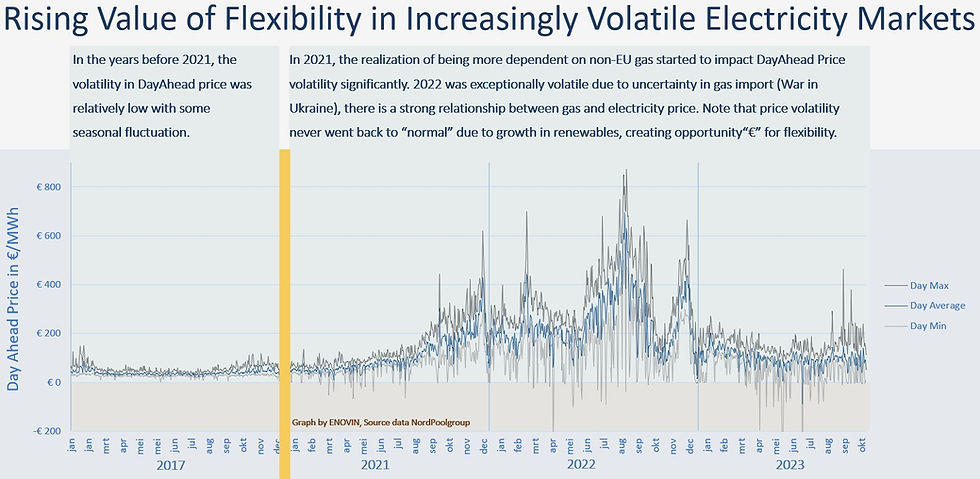
Industrial flexibility is not only good for the Dutch energy transition but also for the companies themselves; as the Duck Curve becomes more problematic, the demand for flexibility increases. Companies that invest in flexibility now will be ready to reap the benefits when the demand for this flexibility is highest.
How does your company deal with fluctuating energy generation and consumption? Do you see opportunities for industrial demand response in your sector?
Share your thoughts and experiences below. 👇

Comments